Most years in Bailey, the turn happens on a predictable clock. Labor Day weekend closes out summer on Main Street, the North Fork keeps fishing warm-water patterns for another few weeks, and the aspens up toward Guanella Pass don't really commit to gold until the first days of October. You plan around that rhythm without thinking about it.
This year the rhythm is off by about a week, and the reason is worth understanding if you live here rather than just visit.
The plant calendar moved, the human calendar didn't
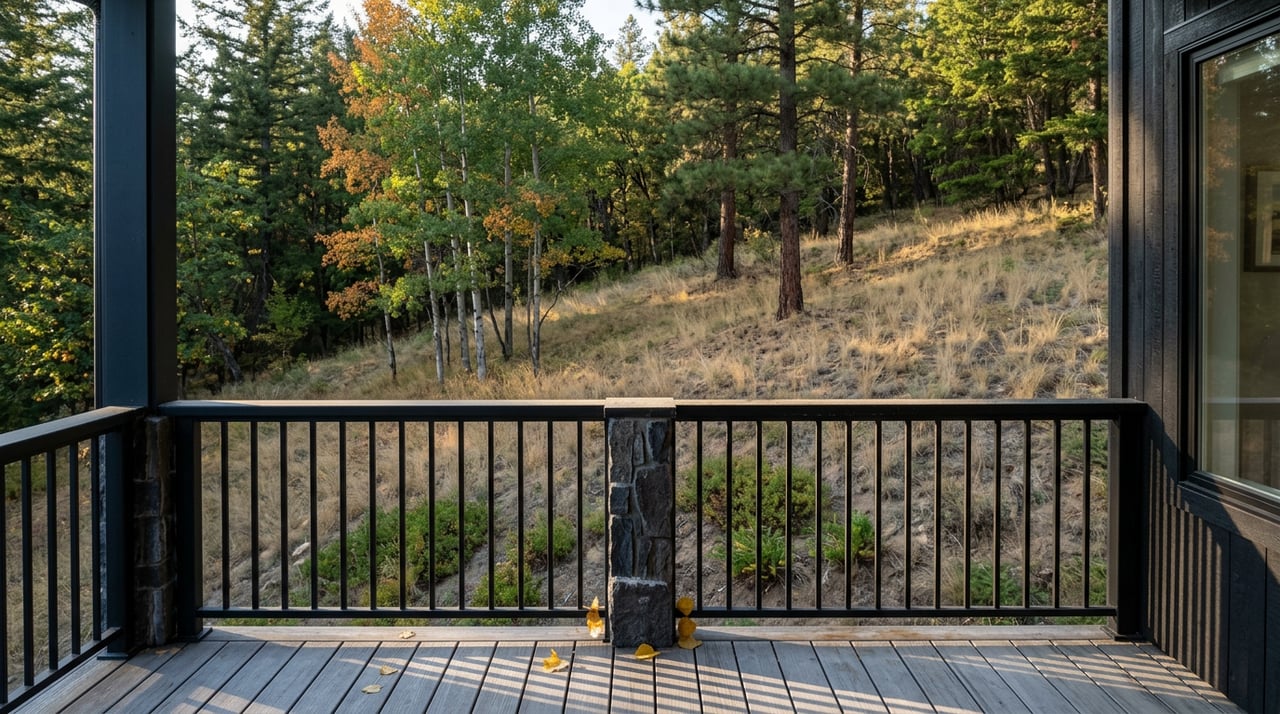
A statewide drought has pushed Colorado's aspens to shut down earlier than usual, and forecasters are watching the mountains peak around September 29 this year rather than the customary first week of October, according to a SmokyMountains.com forecast reported by Axios Denver. A University of Colorado leaf-pigment researcher explained the mechanism plainly: when water runs short, trees stop feeding the season and move straight to shutting down for winter. That's not a subtle shift in timing. It's roughly a week of compression at elevation, and Bailey sits close enough to the high country that the effect reaches town before it reaches the Front Range proper, which the same forecast puts closer to October 6.
Here's what that means in practice. The social calendar in Bailey, the one built around Labor Day weekend as the unofficial end of summer, hasn't moved at all. But the mountain calendar has jumped the gun. For a few weeks in September, both are running at once, which is not how it usually goes.
The weekend that still runs on the old schedule
Bailey Fest 2026 lands on Labor Day weekend, September 4 through 7, with three nights of camping, live music, and community activities that draw people from around Park County into Historic Downtown Bailey. That's the fixed point locals build the end of summer around, and nothing about a dry summer changes when the calendar says Labor Day falls.
Three days after Bailey Fest ends, Talon's Reach XXVI runs an all-day event in Bailey starting at noon on September 10. Between those two dates sits the exact window when, in a normal year, you'd still be waiting for color. This year you won't be.
Here's roughly how the next month lines up if you're trying to plan around all of it at once:
| Date | What's happening |
|---|---|
| Sept 4-7 | Bailey Fest, camping and live music, Historic Downtown Bailey |
| Sept 10 | Talon's Reach XXVI, all-day event |
| Mid-to-late Sept | Blue-winged olive hatch strengthens on overcast North Fork afternoons |
| ~Sept 29 | Mountain aspens forecast to hit peak color, roughly a week ahead of a typical year |
| Early Oct | Front Range color follows, about a week behind the high country |
That's a tighter window than most residents are used to working with. In a wetter year, the festival, the fishing, and the leaves would spread themselves across five or six weeks instead of stacking into a few weeks.
What the river already knew
If you fish the North Fork of the South Platte near Bailey, none of this is news. The stretch here runs smaller and more technical than the famous water downstream at Deckers or Cheesman Canyon, but it holds wild, self-sustaining brown trout throughout the corridor, with cutbows mixed in where Roberts Tunnel water carries through. Public water here averages ten to fourteen inches, honest freestone size, though the short canyon-adjacent stretch near McGraw Memorial Park has given up browns and rainbows to eighteen inches.
The hatch schedule at this elevation is naturally compressed compared to lower water, and blue-winged olives are the workhorse of it, coming off in spring and again through fall on overcast afternoons. Those two windows produce the most dependable dry-fly fishing of the year on this water. Midges carry the cold months, and caddis take over through the warm season. None of that changes because of a dry summer. What changes is that the fall BWO window and the early aspen turn are now landing closer together than usual, so the last good dry-fly stretch of the season and the first real color show are arriving almost in the same two weeks instead of one trailing the other by a month.
For anyone who fishes this water on a seasonal rhythm rather than a calendar date, that's the actual signal to read. The river doesn't care what day Labor Day falls on. It responds to water and light, and both are telling the same early story the aspens are telling.
The one thing that isn't moving at all
Not everything in Bailey runs on a seasonal clock, and it's worth naming the exception. The Sasquatch Outpost on Main Street has operated as a year-round fixture regardless of what the leaves or the river are doing, open Thursday through Monday with its Bigfoot-themed museum and gift shop drawing a steady stream of visitors and a guestbook that reportedly includes names from all fifty states. It added an escape room in 2025 and keeps its hours steady through every season. It's a useful anchor precisely because it doesn't shift. Everything else in town this September is compressing toward the same few-week window. The Outpost just keeps its doors open the same way it always has.
What this actually means if you live here
The takeaway isn't that fall is prettier this year or that you need to rush outside. It's that the usual sequence, Labor Day weekend first, then a few quiet weeks, then color, then the season winding down, has collapsed into something closer to overlap. If you're the kind of resident who plans a Guanella Pass drive for "sometime in October" out of habit, that habit will put you a week or more behind this year. If you fish the North Fork on the assumption that the best fall dry-fly days come after the leaves have already turned, this year they're arriving at nearly the same time.
None of this is dramatic. It's the kind of shift you'd only notice if you've lived through enough Bailey Septembers to have a baseline to compare it against. That's exactly the point. A dry summer changed the timing of three things that usually happen in sequence, not all at once, and this year they're closer to simultaneous than they've been in recent memory.
If you're weighing whether Bailey's shoulder season works for the way you actually use the mountains, that's a conversation worth having with someone who tracks these things locally, not just seasonally.
If you'd like to talk through what property in Bailey or the surrounding foothills looks like heading into fall, from what a lot on the North Fork corridor can offer to how a place holds up through a dry season, Braden Wahr knows this ground well enough to walk it with you. Let's Connect.