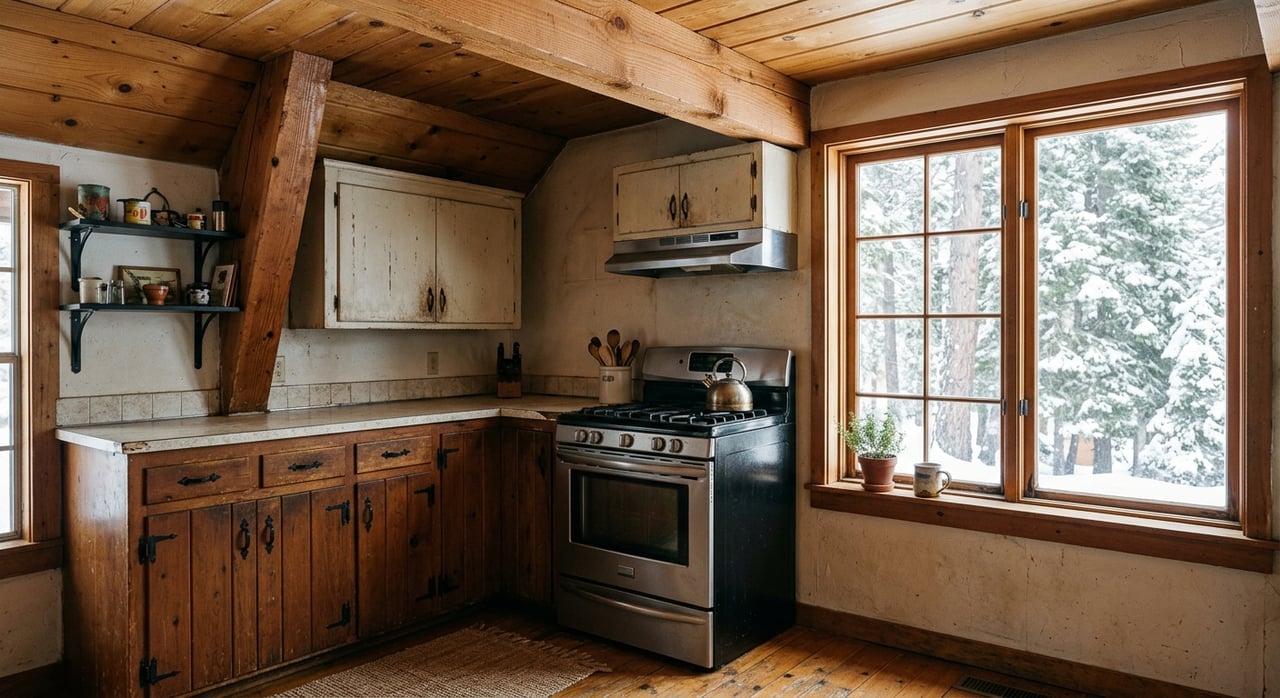
You do not have to love every finish in an older Evergreen home to see a great opportunity. In this market, charm and compromise often show up together, especially in houses that started life as cabins, summer retreats, or early year-round mountain homes. If you know what to look for, you can separate cosmetic quirks from expensive structural or site-related issues and make a smarter decision. Let’s dive in.
Why Evergreen Homes Feel So Different
Evergreen’s older housing stock reflects how the area grew over time. Jefferson County ties the community’s history to summer-resort roots and later year-round development, which helps explain why many older homes do not fit a standard suburban mold.
For buyers, that usually means you will run into three broad types of older homes. Some began as small cabins and were expanded later. Others were built as lodge-like summer properties or retreats. Still others came from the post-war and late-20th-century shift toward full-time mountain living.
Common Older Home Types
Original cabins with additions
These homes often started with simple footprints and picked up extra rooms over time. That can create charm, but it can also lead to unusual flow, lower ceiling areas, or sections of the house that feel like they were built in different eras.
When you tour a home like this, pay attention to how the spaces connect. A layout that feels quirky may be easy to live with, but a layout that depends on awkward additions or heavily altered walls may deserve a closer look.
Lodge-like retreat properties
Some older Evergreen homes have a more retreat-style feel, with wood-heavy interiors, multiple smaller rooms, and additions accumulated over decades. These homes can offer character you simply do not find in newer construction.
At the same time, they may be harder to update if you want an open layout or more conventional bedroom and bathroom arrangements. The potential is still there, but the path to getting there is not always simple.
Later year-round mountain houses
Homes from later development waves are often closer to what buyers expect today. You are more likely to see familiar bedroom and bathroom layouts, larger living spaces, and plans built for full-time occupancy.
Even so, these homes still sit on mountain sites. Snow load, drainage, access, and slope-related conditions can matter just as much as the floor plan.
Cosmetic Potential vs. Real Work
One of the most helpful ways to evaluate an older Evergreen home is to ask a simple question: are you changing the look of the home, or changing the home itself?
Jefferson County notes that replacing cabinets, flooring, and counters in the same locations may not require a permit. That is very different from projects that move or remove walls, change windows, alter room layouts, or add bedrooms and bathrooms.
Usually simpler updates
These updates are often closer to cosmetic work:
- Paint
- Flooring replacement
- Counter replacement in the same location
- Fixture swaps
- Cabinet refreshes or similar replacements
These projects can still cost money, but they are usually easier to plan for. They also tend to make an older home feel more livable without reshaping the structure.
Projects that can get complicated fast
These changes are more likely to trigger review or permitting:
- Moving, modifying, or removing walls
- Changing window locations
- Finishing a basement
- Adding egress windows
- Reworking kitchen, bedroom, or bathroom layouts
- Increasing bedroom count
In Evergreen, that distinction matters because a project can shift from a design choice to a permitting, engineering, or utility question very quickly.
Exterior Work Matters More Here
In mountain properties, exterior work deserves extra attention. Jefferson County’s wildfire code says the wildfire requirements apply to new buildings and exterior alterations such as additions, deck replacements, re-siding, and re-roofing.
Interior-only work, including a kitchen remodel, is treated differently. If you are only thinking about indoor updates, that may simplify things. But if your plan includes a new roof, new siding, or a major deck project, you need to account for the county’s wildfire-related standards early.
Roofing and siding are not just style choices
A full roof replacement in the wildland-urban interface must meet the county’s roofing standards. Re-siding and similar exterior changes can also fall under wildfire-related requirements.
That does not mean you should avoid these projects. It means you should budget and plan with local rules in mind, because in Evergreen the exterior envelope affects both livability and compliance.
The Systems That Can Change Everything
In older foothills homes, hidden systems often have a bigger impact on value than countertops or paint colors. Before you count bedrooms or dream up an addition, make sure the property’s infrastructure supports your plan.
Septic can limit bedroom changes
Jefferson County notes that bedroom additions on septic-served properties must comply with the onsite wastewater permit. In practical terms, the permit may limit how many bedrooms the property can support.
That is a big deal for buyers who see an office, loft, or unfinished space and assume it can become another legal bedroom. In Evergreen, the answer may depend less on square footage and more on wastewater capacity.
Wells need real attention
Some parts of Jefferson County rely on private wells, and the county notes that private wells are the homeowner’s responsibility. The county also says an annual checkup by a qualified water-well contractor is best practice.
If a home has a private well, treat that as part of your due diligence. Water systems are not as visible as kitchens or floors, but they matter deeply to day-to-day ownership and long-term planning.
Structural Questions Deserve Respect
Older mountain homes can hide more complexity than they show at first glance. Jefferson County’s permit materials call out site and design factors like elevation, snow load, wind load, frost line, flood hazard, and, in some cases, engineered soils or dipping-bedrock conditions.
That is one reason a seemingly simple remodel can become more technical. The county also requires stamped documents from an engineer or architect for foundations, certain framing conditions, beam spans, and other structural elements.
When to bring in a specialist
A general home inspection is a smart first step. In an older Evergreen property, though, the inspection often tells you whether you need more experts rather than giving every final answer on its own.
It often makes sense to bring in a structural engineer or architect when the home has questions around:
- Foundations
- Load-bearing walls
- Roof framing
- Beams or spans
- Nonstandard framing
- Major additions or structural changes
This is where local, renovation-informed guidance can really help. You do not want to overreact to every imperfect detail, but you also do not want to mistake a structural issue for a cosmetic one.
How to Budget With Resale in Mind
If you buy an older Evergreen home, it helps to think about updates in the right order. The strongest approach is usually to fix safety and envelope issues first, improve function second, and consider style upgrades last.
That order lines up with both local realities and broader remodeling patterns. National remodeling data cited in the research shows strong resale results for many exterior improvements, while larger interior remodels can be harder to recoup, especially when they are highly customized.
A smart order of operations
If you are weighing a home with visible potential, this is often the best budgeting framework:
- Address safety concerns and major deferred maintenance
- Protect the home’s envelope, such as roof or exterior condition
- Confirm septic, well, drainage, and access realities
- Improve function and flow where practical
- Spend on finish-level style upgrades last
This approach helps you avoid pouring money into surfaces before you understand the home’s bigger constraints. It also supports better resale decisions if you may sell in a few years.
What Buyers Should Notice During a Showing
It is easy to get distracted by wood ceilings, stone fireplaces, or mountain views. Those features matter, but older Evergreen homes deserve a more disciplined walk-through.
As you tour, pay attention to the home’s origin, the way additions connect, and whether the layout feels naturally planned or gradually pieced together. Then shift your attention to the exterior, the site, and the utility setup.
A practical Evergreen checklist
Use this quick list to frame what you are seeing:
- Does the layout feel original, expanded, or heavily altered?
- Are there signs that additions were layered on over time?
- Would your planned updates be cosmetic, or would they change walls, windows, or room count?
- Is the property likely on septic, and could that affect bedroom plans?
- Does the home rely on a private well?
- Would exterior work trigger wildfire-related requirements?
- Are there obvious concerns with rooflines, drainage, slope, or access?
You do not need every answer on the spot. But the more clearly you identify these questions before making an offer, the better your decision will be.
Seeing Potential the Right Way
The best older Evergreen homes are not always the most polished ones. Often, the real opportunity is in a house with solid fundamentals, manageable updates, and a setting you cannot easily recreate.
What matters most is knowing where the upside is real and where the risk is hiding. In a market like Evergreen, potential is not just about vision. It is about understanding which projects are cosmetic, which are code-driven, and which require specialist review before you close.
If you are weighing an older mountain home in Evergreen, having someone who understands both property value and renovation realities can make the process feel much clearer. If you want a practical second opinion on a home’s upside, connect with Braden Wahr.
FAQs
What kinds of older homes are common in Evergreen?
- Buyers often encounter older cabins that were expanded later, lodge-like retreat properties, and later year-round mountain homes shaped by Evergreen’s development history.
What remodels usually need more review in Evergreen homes?
- Projects that move walls, change windows, rework layouts, finish basements, add egress windows, or increase bedroom count are more likely to require review, permits, or specialist input.
Why does septic matter when buying an older Evergreen home?
- On septic-served properties, the onsite wastewater permit may limit the number of bedrooms allowed, which can affect future layout changes or additions.
Do private wells affect older mountain home ownership in Evergreen?
- Yes. Some Jefferson County properties rely on private wells, and homeowners are responsible for their upkeep, with the county noting annual checkups by a qualified water-well contractor as best practice.
Does exterior remodeling trigger wildfire rules in Evergreen?
- Yes. Jefferson County says wildfire-related requirements can apply to exterior alterations like additions, deck replacements, re-siding, and re-roofing, while interior-only remodels are treated differently.