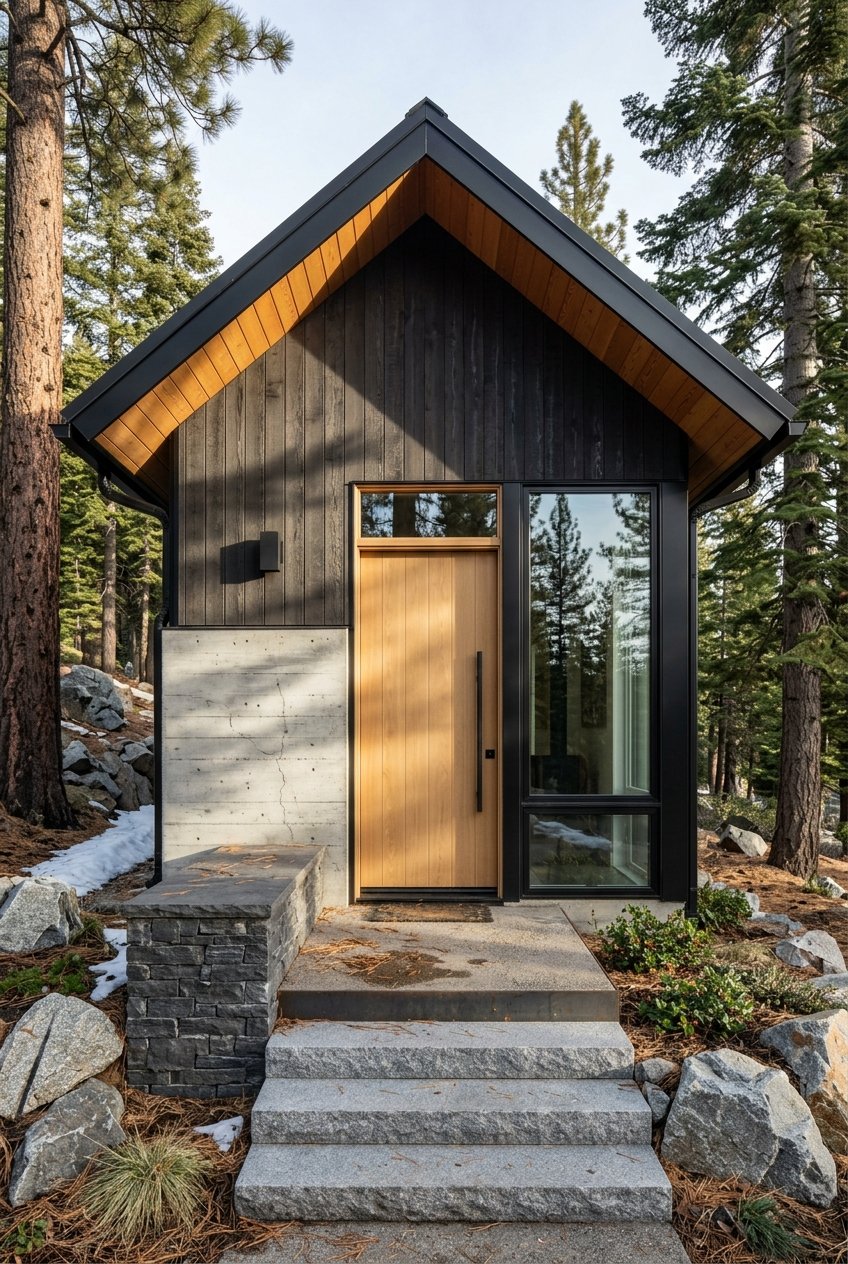
Thinking about building a cabin or custom home in Bailey? It is easy to fall in love with the setting first, then realize later that access, utilities, wildfire planning, and county rules can shape what is actually possible on a parcel. If you want to buy smart and avoid expensive surprises, a little early planning goes a long way. Let’s dive in.
Why Bailey takes extra planning
Bailey sits in Park County at roughly 7,700 feet above sea level, about 40 miles west of Denver. That high-elevation, rural setting is a big part of the appeal, but it also affects how you evaluate land and older cabins.
Cold winters, limited paved roads, and stretches that may be snowed in for days can directly affect access and day-to-day usability. In Bailey, road conditions are not just a lifestyle detail. They are part of the property decision.
If you are comparing parcels, think beyond views and acreage. You also want to know how the property functions in winter, how you will reach it, and what it will take to develop or maintain it over time.
Start with the parcel, not the address
One of the biggest mistakes buyers make is focusing too much on the listing address. In Park County, the legal description is what defines the property, not the street address.
That means your first review of a Bailey listing should center on the parcel itself. Zoning, subdivision status, and mapping details matter more than the mailing address alone.
Before you move forward, verify:
- Legal description
- Parcel identity
- Zoning
- Subdivision status
- Boundary details
- Any land-use limits that may affect your plans
This matters even more if you are buying from out of area. A parcel that looks straightforward online may have development limits or sequencing rules that only become clear when you review county records.
Check access before you picture the build
In Bailey, access can make or break a property. Park County does not maintain private roads or subdivision roads outside the county road system, and some remote county roads may be graded only once a year.
That makes road status worth confirming early. You want to know whether access is county maintained, private, seasonal, or dependent on shared road arrangements.
Driveway planning also matters sooner than many buyers expect. Park County requires a driveway permit before construction, and property owners are responsible for building and maintaining their own driveways and parking areas.
Before you commit to a site, ask practical questions like:
- Is the road publicly maintained or private?
- How is the road handled during snow events?
- Where can the driveway realistically go?
- Will grade, terrain, or right-of-way limits affect the site plan?
- Could access costs change the overall budget?
Park County notes that county-road right-of-way averages 30 feet on each side of the centerline. That is one more reason to confirm setbacks and access details before finalizing plans.
Utilities can decide the timeline
In many Bailey-area purchases, utility research should happen early, not after you go under contract. Some properties may be served by Bailey Water and Sanitation District, but many foothills parcels rely on private wells and septic systems.
If a parcel needs a well, Park County requires a well permit before drilling. If it needs onsite wastewater treatment, the septic permit must be secured before a building permit is issued.
That sequence matters because utilities often control the build timeline. Colorado DWR says complete applications for new well permits can take up to 49 days to review, so it is smart to factor that into your planning from the start.
For vacant land or older cabins, it helps to verify:
- Whether water and sewer district service is available
- Whether the parcel will need a private well
- Whether septic feasibility has been evaluated
- What permits are still needed
- Whether existing well water should be lab tested
Park County also recommends certified-laboratory testing of well water for bacteria, nitrates, radioactivity, and metals. That is especially useful if you are evaluating a property from a distance and want a clearer picture of readiness.
Wildfire planning is part of due diligence
In Bailey, wildfire planning is not optional background research. Park County treats wildfire risk, defensible space, and emergency access as core considerations when choosing a building site.
The county provides wildfire-readiness information and a Wildland-Urban Interface fire-risk map. It also directs Bailey-area projects to check with Platte Canyon Fire Department about local fire-mitigation requirements.
In practical terms, that means a parcel can look buildable on paper but still require mitigation review before your design is truly ready. It is much better to check that early than to rework plans after architectural decisions are already in motion.
What to confirm on an older cabin
If you are buying an existing cabin or older home with plans to remodel, expand, or rebuild later, do not rely on the listing alone for improvement history. Permit records matter.
Park County has a process for requesting prior building permits and related documents such as approval sheets, as-builts, and septic permits. That can help you verify whether additions, garages, remodels, or other improvements were properly permitted.
This is especially important if you are considering a property with visible updates but limited paperwork. It can affect financing, insurance conversations, future expansion plans, and your renovation budget.
Also keep in mind that Park County requires a transfer-of-title inspection for onsite wastewater systems when property changes hands. For cabin buyers, that makes septic due diligence a key part of the transaction.
Know your future-use limits now
A lot of buyers are not just shopping for what a property is today. You may be thinking about a future garage, workshop, guest space, or addition.
In Bailey, it is important to confirm those ideas before closing. Park County handles boundary-line changes, land-use changes, variances, and driveway-standard exceptions through its planning process, and not every parcel will support every idea.
One rule catches buyers off guard: if a residential parcel is zoned residential, the first structure must be a dwelling. So if you are picturing building a detached shop first and the house later, that plan may not line up with county rules.
A smart sequence for vacant land
If you are buying land for a custom build, the order of operations matters. A practical sequence based on Park County guidance helps reduce delays and surprises.
1. Confirm zoning and legal access
Start with the basics. Make sure the parcel is legally identifiable, zoned for your intended use, and has access that works in both legal and practical terms.
2. Complete survey and site-related checks
For vacant land, this may include a survey and wetlands delineation where needed. Clear property lines and accurate site information make later steps much smoother.
3. Request a site evaluation
Park County’s site-evaluation process requires clearly marked property lines, a visible address or lot number from the road, and supporting documents such as the planning sheet, warranty deed, and survey plat. The county also notes that a site evaluation does not tell you where to place the home.
4. Verify well and septic feasibility
This is often the turning point for a parcel. Before you get too far into plans, make sure water and wastewater solutions are realistic and permitted.
5. Hire the right builder and engineer
Your build team matters in Park County. General contractors need a county-issued contractor license, and excavation, roofing, and mechanical contractors also need Park County licenses.
Park County also says plans must be stamped by a Colorado Registered Structural Engineer because the county is in a special wind and snow load area. That is one reason local experience matters.
6. Submit the building permit package
Once the property details, site conditions, and utility path are confirmed, you are in a better position to move into formal permitting. Trying to rush this step before the groundwork is done usually creates delays.
Temporary living plans need a reality check
Many land buyers assume they can camp on-site or place a temporary setup on the parcel while building. In Park County, those assumptions need to be checked early.
The county says camping for more than two weeks per year requires a permit, camping units cannot be left on lots when not in use, and mobile homes are not allowed except in mobile home park zone districts. The county also says sleeping structures must have electricity, plumbing, sanitation, and running water.
If you plan to live on-site during construction, Park County does allow that, but it requires a Construction Dwelling Registration form with the building permit application. It is a good example of why your living plan should be discussed before you buy, not after.
Owner-builder projects are possible, with rules
If you are thinking about building your own home, Park County does allow owner-builder projects. But there are still important guardrails.
The county says an owner-builder cannot offer the structure for sale until the certificate of occupancy is issued. It also limits owner-builders to one dwelling every four years.
Permits must begin within 180 days and show progress every 180 days to remain active. For buyers drawn to the hands-on route, that timeline and engineering requirement should be part of the planning conversation from day one.
Why local guidance matters in Bailey
A Bailey purchase often involves more moving parts than a typical suburban transaction. Planning and Zoning, Building, Environmental Health, GIS/Mapping, Public Works, and local fire-mitigation review can all play a role depending on the property.
That is why it helps to work with someone who understands both the real estate side and the build-feasibility side. When you are evaluating land, a cabin, or a future custom-home site, you want to look at what the property is today and what it can realistically become.
If you are considering a cabin, vacant land, or a custom-home project in Bailey, Braden Wahr can help you sort through parcel questions, access concerns, remodel potential, and the practical next steps with a local, construction-aware perspective.
FAQs
What should you verify first on a Bailey land listing?
- Start with the legal description, parcel identity, zoning, and subdivision status, since Park County says the legal description, not the street address, defines the property.
How important is road access for a Bailey cabin or custom home?
- Very important. Park County notes that some roads are private, some remote county roads may be graded only once a year, and winter access can affect usability and maintenance costs.
Do Bailey properties always have public water and sewer?
- No. Some parcels may be served by Bailey Water and Sanitation District, but many rely on private wells and septic systems.
When should you check wildfire requirements in Bailey?
- Early in the process, before finalizing a site plan, because Park County directs Bailey-area projects to coordinate fire-mitigation questions with Platte Canyon Fire Department.
Can you live on vacant land while building in Park County?
- You need to verify the rules first. Park County allows living on-site during construction with a Construction Dwelling Registration form submitted with the building permit application.
Can you build a shop before a house on a residential Bailey parcel?
- Not typically if the parcel is zoned residential, because Park County says the first structure must be a dwelling.